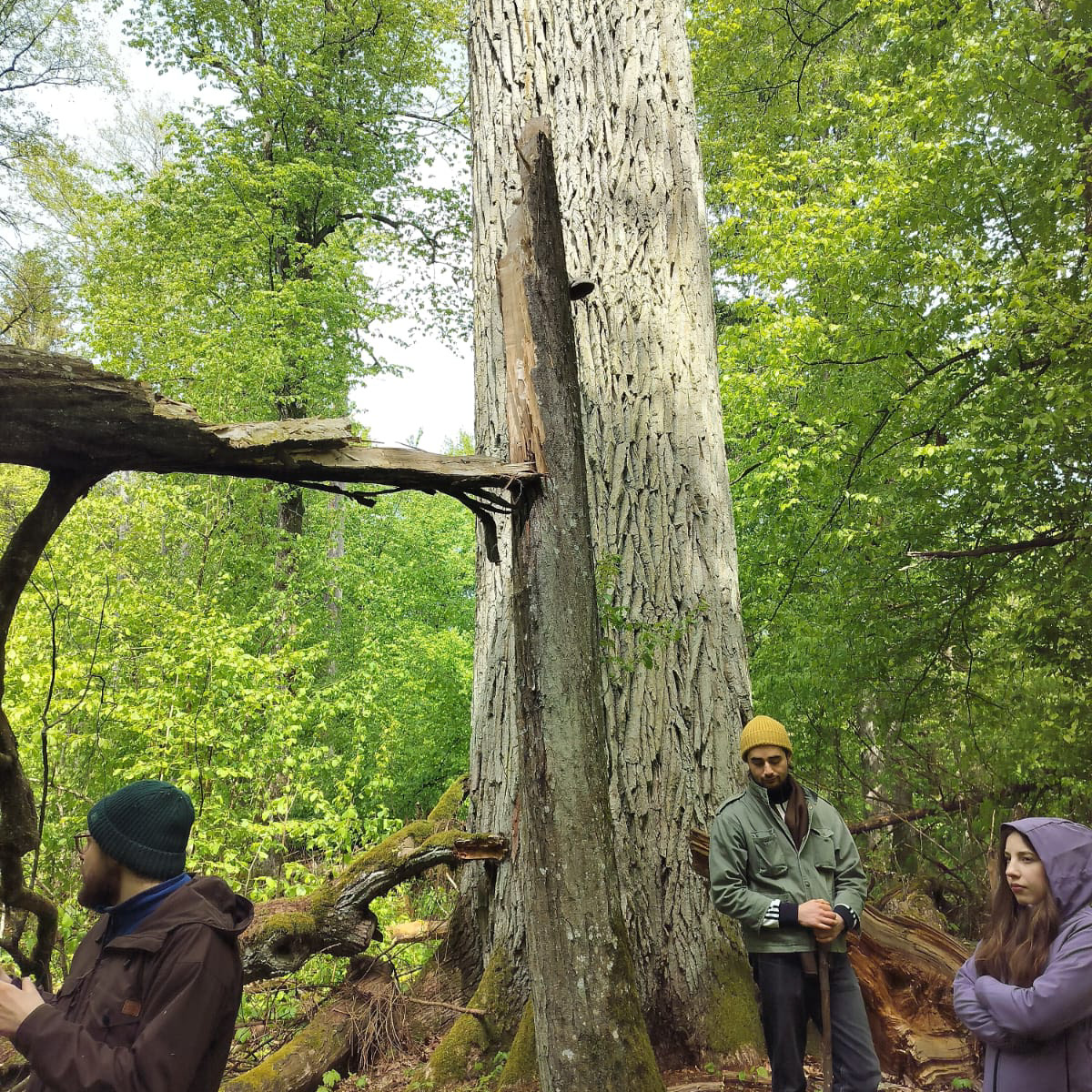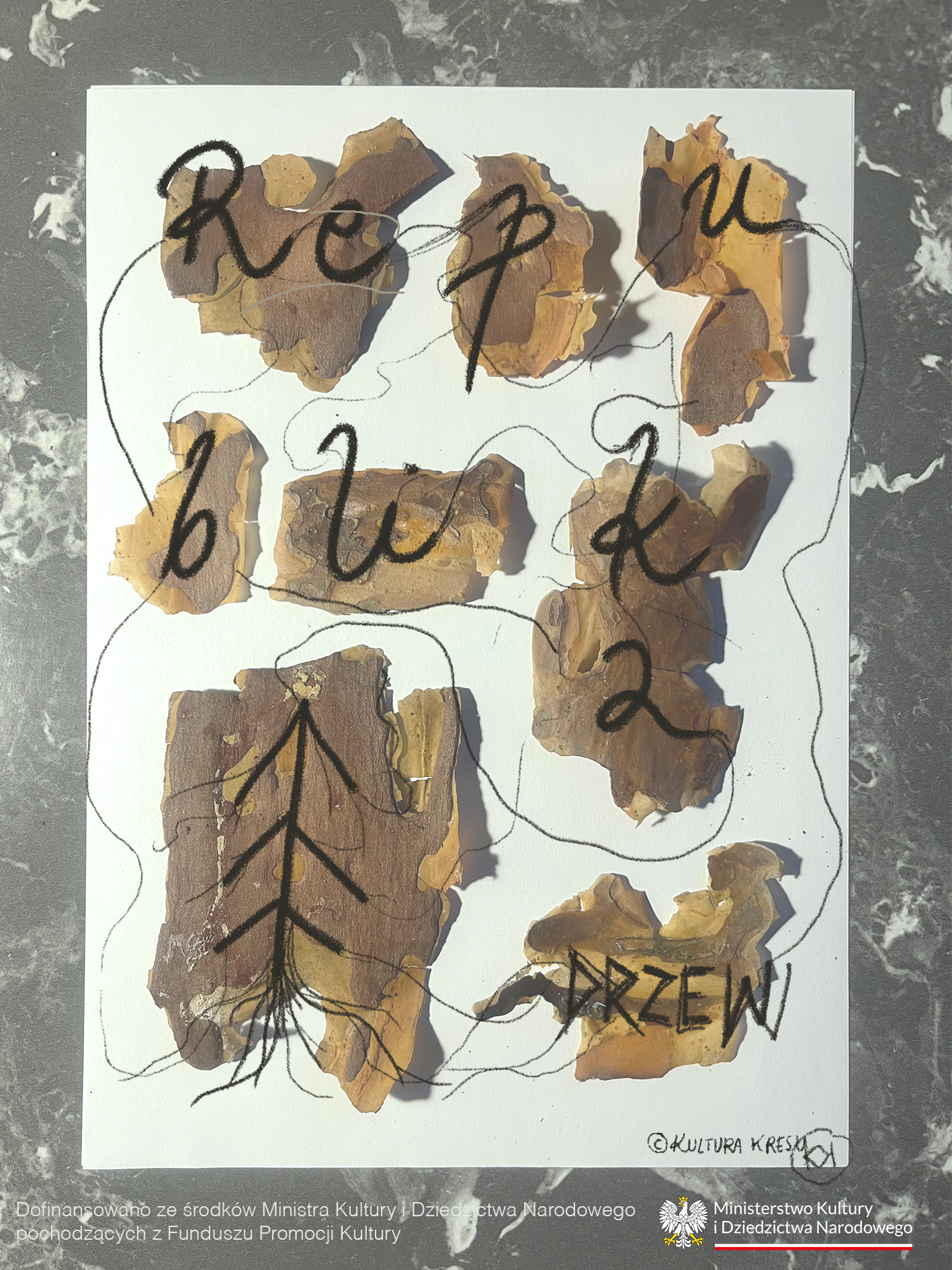
In early 2026, we have begun an ongoing mentoring and educational program, "Republic of Trees," running both as an online sessions module and as a series of in-person gatherings in the Białowieza Forest (in collaboration with the House of Nature and Culture Association in Teremiski). You can read about all the details here and apply with an open call to participate in our project without any additional costs. The program is open to Polish and international participants :
Kasia Hertz, founder of Kultura Kresu about the project:
"Republika Drzew is above all a program that connects beings who have much in common and need each other, yet often don't know of each other's existence, and frequently fail to notice their own potential, resources, or the possibilities of the environment they live in. So this isn't about creating new relationships, but about revealing ones that already exist while remaining invisible or unnoticed.
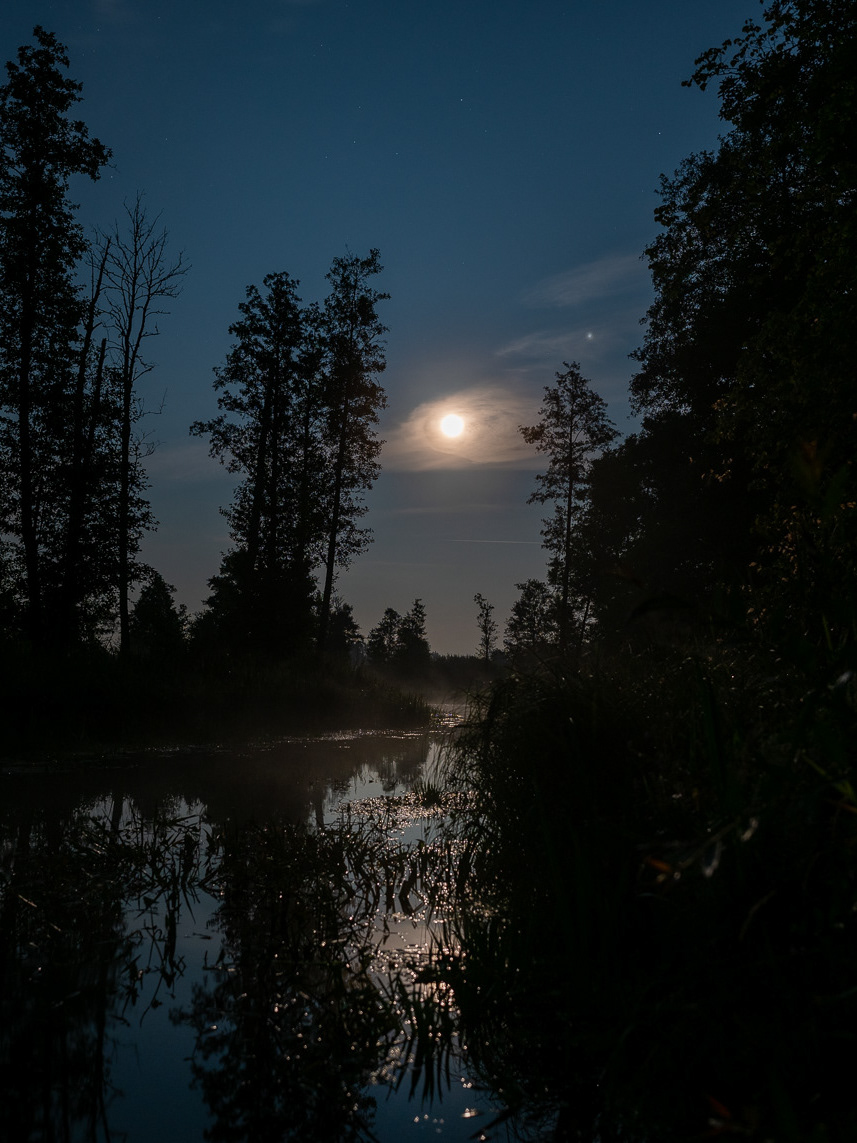
I built this program first through own experience of living in the Białowieża Forest, and through close, long-term observation of coexisting systems, above all the forest system and the human one. Over nine years I had the chance to actively participate in and observe many crises unfolding in this ecosystem, to track its transformations, but also to recognize the needs and possibilities of this place in the context of the role of art, the language of art, activism, environmental protection, human rights, and social, cultural, and climate change.
Over time I began to notice that the mechanisms I observe in the forest are not limited to the forest. They are universal principles for organizing life, building resilience, exchanging resources, cooperating, responding to crises, and regenerating. That's when the question arose: if nature has spent millions of years developing solutions that allow complex systems to function and adapt to constant change, why do we still treat it solely as an object of study, rather than as a source of knowledge for designing our own social, political, and relational structures?
Today, more than ever, we need to bring together different perspectives, languages, experiences, and fields, especially those that remain marginalized, excluded, or that exist at the edges of dominant narratives. It's precisely there that we often find the resources the center can no longer perceive.
I believe that the center of the world doesn't exist, and second, if we were to look for it, it would be found outside the center, in border and liminal zones, where different orders, languages, species, and experiences meet. For me, the Białowieża Forest is such a place.
The principles of dialogue, cooperation, and exchange were already described and designed by nature long ago. A natural forest is one of the most complex examples of systems functioning through interdependence, decentralization, and mutual reinforcement of resilience. Yet we still look at these processes as a data set about a separate ecosystem that exists somewhere alongside us.
Republika Drzew proposes reversing this perspective. What happens if we treat biological structures not as a curiosity or a metaphor, but as an instruction? Not as ready-made solutions to copy, but as a set of principles that can inspire the way we design social relations, communities, institutions, or processes of cooperation.
This also changes the language we use to talk about nature conservation. As long as we position ourselves as external observers, studying subordinated objects, data containers, or natural resources, we will only see fragments of a larger whole. But we are not observing something separate from us. We are observing processes we ourselves are part of. The answers we're looking for are often within reach. They don't concern only other species. They concern us as well.
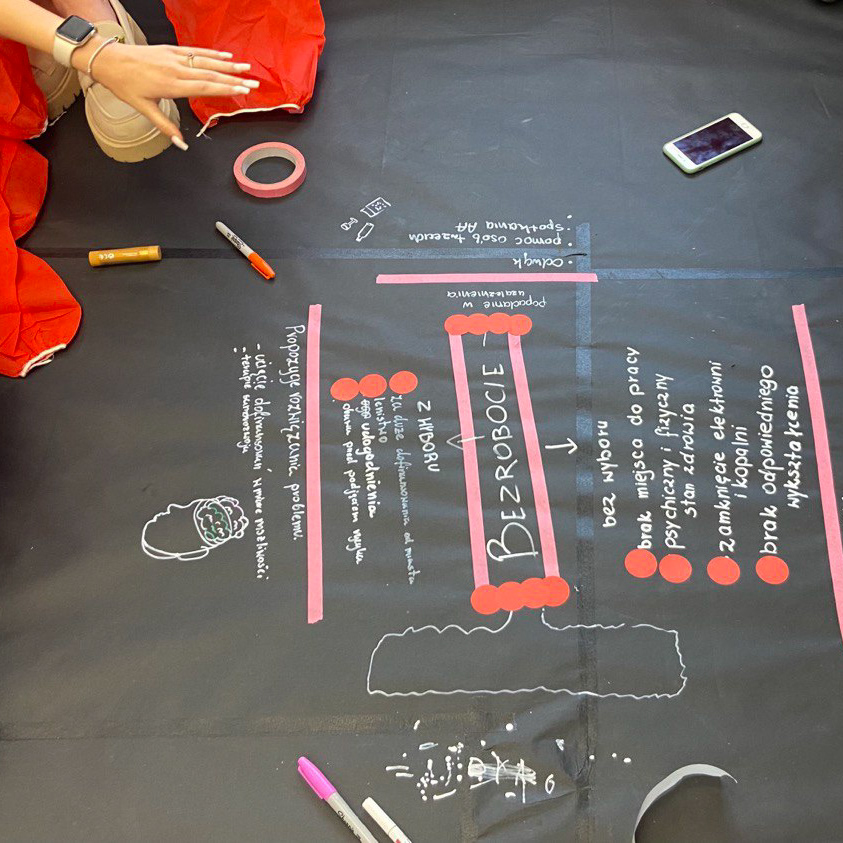
From this perspective the practice of Forest Syntax emerges. Its starting point is reciprocity mapping, that is, mapping the points of resource exchange within a local ecosystem, not only between people, but also between species, institutions, places, knowledge, experiences, and forms of life. The goal is not to create new networks, but to reveal existing connections, to find places where flows have been severed, and to strengthen relationships that increase the resilience of the whole system."
Dofinansowano ze środków Ministra Kultury i Dziedzictwa Narodowego pochodzących z Funduszu Promocji Kultury – państwowego funduszu celowego